Rod-West
  • Just Thinking
  • About
    • Beliefs
  • Biblical Counseling
    • Coaching & Pastoral Care
  • Contact
    • Subscribe
  • Give
  • Media
    • Good Reads
    • Israel
    • Sermons
  • CCS Store

Four Evidences for the Existence of God

4/25/2013

0 Comments

 
Revelation –“Something that was previously unknown by man and 
could only have been known by God, and therefore only revealed by God”

Picture
God has revealed Himself to mankind in a plethora of ways. The evidence for His existence is seen in the physical world in a general sense and supernaturally through His Son and Word.

Here are four arguments for the existence of God:

1.  The cosmological argument is known as the cause and effect argument. Everything that exists must have an adequate cause, and an all-powerful intelligent God is certainly an adequate cause to explain our universe. He can be clearly seen as the creative power behind the natural world in which we live, and the celestial world we gaze into each evening.

Psalm 19:1-4a (ESV) The heavens declare the glory of God, and the sky above proclaims his handiwork. 2 Day to day pours out speech, and night to night reveals knowledge. 3 There is no speech, nor are there words, whose voice is not heard. 4 Their voice goes out through all the earth, …

Romans 1:20 (ESV) For his invisible attributes, namely, his eternal power and divine nature, have been clearly perceived, ever since the creation of the world, in the things that have been made. So they are without excuse.


2.  The teleological argument looks at the order and design of our universe and demands that God must exist. If there is a design there must be a designer. Mankind himself as a living intelligent being supports the argument for a living and intelligent God.

Psalm 19:4 (NJB) but from the entire earth the design stands out, this message reaches the whole world. High above, he pitched a tent for the sun,

Psalm 19:6 (NLT) The sun rises at him one end of the heavens and follows its course to the other end. Nothing can hide from its heat.

Psalms 94:8-9 (HCSB) Pay attention, you stupid people! Fools, when will you be wise? 9 Can the One who shaped the ear not hear, the One who formed the eye not see?


3.  The ontological argument is a deductive one. It reasons that the idea of a perfect and infinite Being cannot be derived from a finite and imperfect being. Therefore only an infinite Being could place such an idea in the mind of man. In essence we know instinctively that God exist; if He didn’t exist the atheist would have no reason to argue his case.

“Unless [an atheist] is carrying on his fight against absolute 
nothingness … then he must be [arguing] against something he finds 
ingrained in himself and in others.” Addison Leitch

“Man doesn’t call a line crooked unless he has some idea of a straight line. 
What was I comparing this universe with when I called it unjust? C. S. Lewis

Romans 1:18-19 (NLT) But God shows his anger from heaven against all sinful, wicked people who push the truth away from themselves. [19] For the truth about God is known to them instinctively. God has put this knowledge in their hearts.

4.  Special revelation takes a variety forms and gives evidentiary support for the existence of God. This supernatural revelation is primarily seen in the incarnate Christ and the distinctiveness of the Bible.

John 3:2 (HCSB) This man came to Him at night and said, “Rabbi, we know that You have come from God as a teacher, for no one could perform these signs You do unless God were with him.”

The evidence for God’s existence is seen through the first advent of Christ, His miraculous works, eyewitness accounts, and historical writers.

Hebrews 1:1-2 (NASB) God, after He spoke long ago to the fathers in the prophets in many portions and in many ways, 2 in these last days has spoken to us in His Son, whom He appointed heir of all things, through whom also He made the world.

2 Peter 1:16-17 (NASB) For we did not follow cleverly devised tales when we made known to you the power and coming of our Lord Jesus Christ, but we were eyewitnesses of His majesty. 17 For when He received honor and glory from God the Father, such an utterance as this was made to Him by the Majestic Glory, "This is My beloved Son with whom I am well-pleased"


The historical writers I speak of are not that of Matthew, John, Peter, or Paul, but of secular historians who were certainly no friends of Christianity. These writers such as Tacitus, Suetonius, Pliny the Younger, and Josephus just to name a few confirm the existence of Christ Jesus and His works.

The Bible also attests to the existence of God; it is accurate and trustworthy in all areas even beyond theology. No other ancient writings can even “hold a candle” to the number of known New Testament manuscripts in existence. Then we also have the discovery of the Dead Sea Scrolls which supports the trustworthiness of the Old Testament.
“Men do not reject the Bible because it contradicts itself, 
but because it contradicts them.” - Author unknown

Searcher your hearts and know this for sure; the God Who formed the universe also sent His Son to redeem us from our sin. He not only exists – He also loves you.

Blessings,
Rod
0 Comments

Breaking Free From the Ruts of Life

4/23/2013

0 Comments

 
Picture
Do you ever find yourself in a spiritual rut? Are there times when you have more questions than answers and your spiritual vision is clouded by doubts and confusion? Has it been a while since you've heard from God?

The picture to the left is a shot of the Oregon Trail and the deep ruts left by the many wagons which traversed the rocky landscape 175 years ago. For 25 years (1841 – 1866), there were an estimated 650,000 people who left their homes in the east and headed west. It’s amazing how treading the same ground day after day can wear ruts into the hardest of surfaces. Many of the people of that time were looking for a sense of freedom and a new way of life. In order for these folks to achieve their dreams changes had to take place. In one way we might say they needed a new “road out” of the daily grind of life.

The four points I share with you in this blog are derived from the book of Exodus which literally means “road out.” The people of Israel were in an “Egyptian rut,” and Moses was charged with leading God’s people on a new road out of bondage and despair to the Promise Land. In doing so these people would need to rise to the challenge before them and follow an unchartered path by faith.

1.  The first step in breaking free from the ruts of our lives is to obediently follow God’s lead and change our present course.

Exodus 14:1-4 (ESV) Then the LORD said to Moses, 2 “Tell the people of Israel to turn back and encamp in front of Pi-hahiroth, between Migdol and the sea, in front of Baal-zephon; you shall encamp facing it, by the sea. 3 For Pharaoh will say of the people of Israel, ‘They are wandering in the land; the wilderness has shut them in.’ 4 And I will harden Pharaoh’s heart, and he will pursue them, and I will get glory over Pharaoh and all his host, and the Egyptians shall know that I am the LORD.” And they did so.

God’s direction for the Israelites appeared to be all wrong because it would seemingly box them into a corner with no way out, yet this is often the type of situation where God thrives and His glory is revealed. God’s ways are not our ways but His divine plan for our lives is better than anything we can devise on our own.

2.  Our second step is to realize it takes a certain degree of faith to break free from the ruts and turning back only brings a greater sense of enslavement.

Exodus 14:10-12 (ESV) When Pharaoh drew near, the people of Israel lifted up their eyes, and behold, the Egyptians were marching after them, and they feared greatly. And the people of Israel cried out to the LORD. 11 They said to Moses, “Is it because there are no graves in Egypt that you have taken us away to die in the wilderness? What have you done to us in bringing us out of Egypt? 12 Is not this what we said to you in Egypt: ‘Leave us alone that we may serve the Egyptians’? For it would have been better for us to serve the Egyptians than to die in the wilderness.”

The reaction of the Israelites is no different than what many of us do during times of trouble. When we’re frightened and confused we tend to cry out, ask questions, and cast blame revealing our lack of faith and confidence in the ability of God. The Lord never brings us through difficulties with the intention of having us turn back to old habits and ways. For the believer the pre-Christian life should be left in the past with a sense of determination to take each new step by faith.

3.  The third step in breaking free from the ruts means we allow God to fight our battles because it’s a divine thing.

Exodus 14:13-14 (ESV) And Moses said to the people, “Fear not, stand firm, and see the salvation of the LORD, which he will work for you today. For the Egyptians whom you see today, you shall never see again. 14 The LORD will fight for you, and you have only to be silent.”

As Christians we are to never allow fear of the unknown, failure, or loss to stop us from any ministry or service God has called us to execute. We should always hold to the truth that God is able to accomplish His will in each and every life. I adopted Philippians 1:6 as my life verse many years ago because it’s a constant reminder that if anything good comes from my life it's because God is the One Who performs it in spite of me.

4.  Our fourth step is to continue to trust God’s leadership and move forward with a sense of urgency.

Exodus 14:15-16; 21-22 (ESV) The LORD said to Moses, “Why do you cry to me? Tell the people of Israel to go forward. 16 Lift up your staff, and stretch out your hand over the sea and divide it, that the people of Israel may go through the sea on dry ground. … 21 Then Moses stretched out his hand over the sea, and the LORD drove the sea back by a strong east wind all night and made the sea dry land, and the waters were divided. 22 And the people of Israel went into the midst of the sea on dry ground, the waters being a wall to them on their right hand and on their left.

When fear strikes we often lose focus of what God is really doing in our midst, and what we are called to do is simply listen and respond in obedience. God is the One Who sets our course, and we simply need to believe He will provide a way through the obstacles that block our way.

Blessings,
Rod

0 Comments

To Keep a Marriage Good Takes a Good Deal of Effort

4/21/2013

2 Comments

 
Picture
Anytime two people come together in a relationship to form a marriage there will always be periods of adjustment because we are attempting to forge one will out of two. It is only natural to have moments of conflict in a marriage, and this conflict is not only universal but  inevitable. Another way of expressing this is there will always be a “Battle of the Wills” as two egocentric individuals attempt to merge into one flesh.

Even the most loving couples will have disagreements and normally these disagreements begin with the “little things."  We should be mindful that if we allow these “little things” to go unresolved they always turn into “big things."

Most couples learn over time that resolving their conflicts or battles aren't easy. In the early years of a marriage we often use inadequate measures or techniques to try and solve our issues, some conscious while others are unconscious and typically unsuccessful. Here are five inadequate ways we attempt to resolve the “battle of wills."

  1. Through COMPETITION – One or both seek to impose their will upon the other believing their “way” is best for the marriage. The problem is in every competition someone loses. If the husband wins then the wife loses, or if the wife wins then the husband loses. And forget about a stalemate because the issue will arise again and again. The bottom line is even if you win you ultimately lose because the relationship loses.
  2. Through COMPROMISE – You might as well just flip a coin. This at best is a neutral position and may solve some of the “little things” while postponing the “big things." Now I’m sure some would disagree and believe that compromising on an issue is a good thing in a marriage, but let me remind you we are to be “one flesh,” and compromising doesn't always accomplish this in a relationship. What looks like a compromise may not be one at all because the attitude some have is:  “I’ll give in if it looks like I’m not losing or if it works for me in the short term.”
  3. Some couples live in DENIAL – These are the couples who state “We never fight".  How can I say this … That just isn't true! If this is the norm within the relationship then at least one person is repressing their true feelings. Most likely the feelings repressed are anger and hostility that begin to seep into other areas of life. This person may continue on as if everything is “okay” when in reality they are ready to erupt at any moment. Denial in a marriage often leads to depression and bitterness. 
  4. Some apply ISOLATIONISM – This is the practice of separating into two emotional and psychological life spaces. In this situation wives will often concentrate their focus on their children. If the couple is childless then all of the wife’s efforts may be focused on her career, but in either case she refuses to give her husband the physical and emotional intimacy he needs. Husbands do this also by focusing on their careers seeking advancement and more money. In both cases isolationism at home can lead to extramarital affairs.
  5. The fifth practice is similar to isolationism but takes things a step further through the act of SEPARATION – When one or both spouses go so far to say they need their proverbial “space,” then the likelihood of divorce increases exponentially. I have never been a big proponent of “Therapeutic Separation." Once couples establish two households and gain what seems to be a sense of newfound freedom it becomes much easier to go the next step and end the marriage.     

So the real question is: “How do we resolve the dreaded battle of the wills?”

The answer we seek must be not only feasible, but first and foremost it must be biblical. God has called us to be “one flesh” in the marriage relationship and the solution is simple but not always easy. Both husband and wife must put self aside and DEFER TO A HIGHER AUTHORITY. The higher authority I speak of isn't marriage counselors or pastors; these people are often a good place to start if they’re Christ centered but they’re not God. Both people in a Christian marriage must independently yield their will to the will of God.

As I began this blog one of the first things I said was a bit misleading when I stated, “there will always be periods of adjustment because we are attempting to forge one will out of two.” My statement is true but what is misleading is that in a Christian marriage there are THREE WILLS. His will, her will, and God’s will. It is God’s will that we should seek together, and when we do, the problems we have are never insurmountable. I've never had a marriage counseling situation where the problem couldn't be solved and divorce prevented if both were willing to place God’s will first.

If you’re married now great! Continue to make your marriage better by seeking God’s will first, and always place the needs of your mate above your own.

If you’re not married and want to be then prepare your heart and life now to be the blessing your future spouse deserves. You will never regret the effort you put forth, and your future partner will be eternally grateful.  

This is the last blog in the marriage series, and once again it is my prayer these writings have been a help to you or someone you know. There’s so much more we could cover about what the Bible teaches regarding the Christian marriage and home, but it’s time to move on. I will periodically revisit this topic as God leads, and the situation warrants.

Blessings to you!
Rod
2 Comments

Five Things that Build Stronger Marriages

4/20/2013

3 Comments

 
Picture
1. We should strive to construct stronger bonds in our relationships by putting personal needs aside for the needs of our spouse, and when we fail to do so we fall short of God’s will.

Strengthening the Christian relationship with our spouse is a necessity of life! (Philippians 2:1-7)

2. Accountability is a must in any marriage; if you foster a true friendship with your spouse accountability will naturally follow. (Galatians 6:1-3)
3. Real commitment involves sacrifice while rejecting worldliness by surrendering our minds to Christ for transformation! (Romans 12:1-2)
4. A Christian husband should be willing to do those things for his wife that may seem difficult at the moment in order to benefit the marriage for the long-term gain, and all the while he is to treat his wife with tender care. 

Sometimes this may go against our very nature but God has called Christian men/husbands to a higher standard. (1 Peter 3:7; Colossians 3:19)
5. A committed Christian wife is one who adores her man, and who seeks to increase her inner beauty through spiritual development!
1 Peter 3:1-4 (ESV) Likewise, wives, be subject to your own husbands, so that even if some do not obey the word, they may be won without a word by the conduct of their wives, 2 when they see your respectful and pure conduct. 3 Do not let your adorning be external—the braiding of hair and the putting on of gold jewelry, or the clothing you wear— 4 but let your adorning be the hidden person of the heart with the imperishable beauty of a gentle and quiet spirit, which in God’s sight is very precious.
Two of the sexiest things my wife does is study her Bible each day and demonstrate her support in all I do by standing with me.

Blessings,
Rod
3 Comments

What Love Is …

4/17/2013

1 Comment

 
Picture
For most, defining “love” is often a difficult task in which we search for words and phrases to describe a feeling the majority of society believes to be a natural act found within humanity. If you’ve read my previous blogs during the last three weeks then you’ll probably not be surprised by what you read here today. I believe love isn’t a feeling but in actuality is a supernatural act which can only be fully appreciated and understood through a biblical lens. In order to develop a definition for love we need to seek out an expert on the topic – God’s Word.

1 John 4:7-16 (ESV) Beloved, let us love one another, for love is from God, and whoever loves has been born of God and knows God. 8 Anyone who does not love does not know God, because God is love. 9 In this the love of God was made manifest among us, that God sent his only Son into the world, so that we might live through him. 10 In this is love, not that we have loved God but that he loved us and sent his Son to be the propitiation for our sins. … 12 No one has ever seen God; if we love one another, God abides in us and his love is perfected in us. … 16  So we have come to know and to believe the love that God has for us. God is love, and whoever abides in love abides in God, and God abides in him.
The Apostle John puts it simply for us; God has established the standard of love by and through Himself. A secular view of love operates from a standard based upon a social structure, while God’s structure of love is spiritual in nature and absolute. Note the Apostle’s words at the end of verse eight, “Because God is love.” (As a side note some have perverted this statement through inversion by saying, “God is love therefore love is God” which is a heretical declaration.) The source of love is God and all true love must come through Him. It’s imperative that you keep this in mind as we attempt to define what “love” is.

At this point the question normally arises, “Can non-Christians love also?” The answer is – “yes and no.”

From a secular humanist viewpoint everyone is able to practice and experience love apart from God, but according to the Apostle John this seems to be impossible. Humanism teaches man’s ability to love another is worldly and social in nature because human beings are naturally capable as ethical, moral, and loving beings to do so.

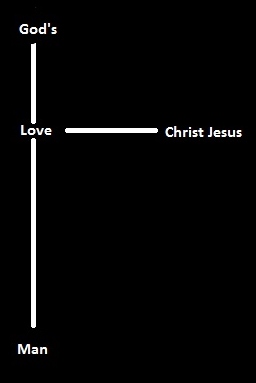
From a Christian viewpoint love is a spiritual act and therefore not natural but supernatural. Note the diagram below.
Picture
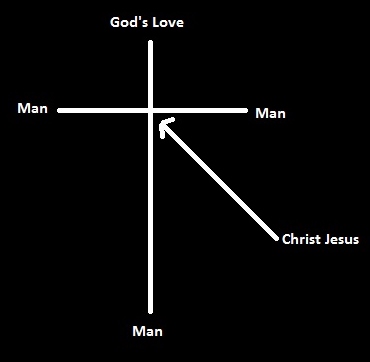
God’s love for mankind is demonstrated and experienced by the giving of His Son Christ Jesus. Therefore love cannot be a natural work of mankind, and because this work is of God it is supernaturally enacted within the natural world. Note the second of diagram.
Picture
A non-Christian can love another yet it's still only because it is based upon the finished work of Christ. Again, all true love must come through Him! So yes non-Christians can practice and experience love even without a full acknowledgment or understanding about the love they have for another. Just because one does not recognize the source of their love does not negate the work of God through His Son Christ Jesus.

With this as our foundation for love we can now better understand the three primary words used for love in the koine Greek.

The first is “eros” from which we obtained the word “erotic.” The meaning here is very base in its nature and is always related to sex. Eros is never found in the Bible.

The second word is “philos” and is a love that is closely associated with friendship. The word “Philadelphia,” meaning brotherly love is derived from “philos.” This word is use some 25 times in the New Testament, but probably one of the best pictures of this type of love is found in the Old Testament with the relationship between David and Jonathan. The camaraderie they share reveals a deep sense of loyalty and trust and serves as an example of true friendship.

The third word is “agape” and is usually described as a “Godlike” love. This love is best understood as an active choice of will regardless of feelings. Obviously John 3:16 is the perfect example in which God chose to demonstrate His love through His only begotten Son despite any feelings He may have had in regards to man’s failure. The key here is that God chose in eternity past to love us in spite of our sinful downfall. This level of commitment on God’s part always amazes me.

Now certainly feelings are associated with “agape/love” but it is to be carried out in spite of the positive or negative feelings one may have for another. Man is surely capable of this type of love as revealed in passages such as Ephesians 5:25 – 30. In the Ephesians passage Christ uses Christian marriages as an illustration of His relationship with the Church; Christian husbands therefore are to sacrificially love their wives in the same manner as Christ loves His Bride.

As stated in previous blogs we do not fall in and out of love, but we choose to love another by committing ourselves to a covenant relationship which is only voided by death, (I speak of marriage here). This is the type of love that says, “I’m committed to you today even though I don’t like you very much because of something you’ve said or done. You may have hurt me or made me angry but I still love you, and I’m still committed to you in spite of your actions and the feelings I’m presently experiencing.” This is the type of love that God has for us as Christians.

Think for moment, when we as Christians sin we in essence have committed an act of spiritual adultery and broken our covenant with Christ. Sin is a constant struggle in the believer’s life. While we live in this flesh God’s grace is increasingly present and His love for us will never vanish. Remember God is a covenantal God who hates divorce and would never break the covenant He established with us through the blood of His Son. I find great assurance in the truths conveyed in Romans chapter 8 concerning God’s love for us.
Romans 8:37-39 (ESV) No, in all these things we are more than conquerors through him who loved us. 38 For I am sure that neither death nor life, nor angels nor rulers, nor things present nor things to come, nor powers, 39 nor height nor depth, nor anything else in all creation, will be able to separate us from the love of God in Christ Jesus our Lord.
Did you catch what the apostle Paul said in verse thirty-nine? Nothing in this world, the spiritual realm, nor things in the past, present, or future “will be able to separate us from the love of God in Christ Jesus.” As Christians we can hold onto the promise that Christ will never leave us or for sake us. Once again this is the type of love we are to have for each other in our marriages, and the source of this love is from God the Father through His Son Jesus the Christ.

In closing here are three things to remember:

  1. Love is a commitment to a relationship involving our whole personality where we attempt to meet the true needs of another human being through the leading and power of the Holy Spirit.
  2. Intimacy is when two or more people are involved in an interdependent relationship of love based upon a shared perception of spiritual equality. This can be experienced in marriages, friendships, and families.
  3. The best marriages always begin with a love of friendship! How do I know? I've seen it numerous times in other relationships through the years, and I've experienced it for the last 30 years by being married to my best friend.

Blessings,
Rod
1 Comment

Five Things that Love is Not…

4/10/2013

0 Comments

 
Picture
Here are five things to remember when you enter into a relationship and choose to love someone.
  1. Love is not physically harmful.
  2. Love is not psychologically harmful.
  3. Love is not spiritually harmful.
  4. Love is not manipulative or conditional.
  5. Love is not selfish or self-centered.

Please be sure to read yesterday's blog, "Ten Neurotic Needs Revealed in Our Relationship Choices."

Pastor Rod
0 Comments

Ten Neurotic Needs Revealed in Our Relationship Choices

4/10/2013

0 Comments

 
Picture
“He looks normal.”

“He even acts normal.”

When we use the word normal about someone we usually mean that an individual has conformed to societal standards, but from a theological view there really is no such thing as “normal” for mankind. Since the beginning of time man has always failed to meet the standard of normalcy established by God in the Garden of Eden because of his sin, and yes I believe there was literally a Garden of Eden. So theologically mankind is abnormal compared to the standard set by God, and is constantly shifting upon a continuum of abnormality. One only appears to be normal when he/she conforms to the standards established by the majority of people in a society. In other words we are all abnormal to some degree, and we only appear normal to those around us when our behaviors are consistently established within the mainstream.

The reason I write this is because it helps us as individuals to honestly deal with the true nature that exist within each of us. We are a fallen people who often look to others in hopes that they will provide us with a sense of meaning and fulfillment in life. As human beings we usually seek out, unconsciously mind you, individuals we believe who will fill a void within our very being. This brings me back to last week’s blog, “Turning Unhealthy Marriages Healthy and Four Neurotic Views of Love,” in which I shared with you a simple definition of a neurotic need.

These are needs we all have based upon a flawed nature and associated with events from childhood and adolescents. These are also factors which play a vital role in shaping us into the people we are today. Again a neurotic need is a “self-defeating pattern of coping with life.” We repeat these patterns throughout our lives because we believe they work for us. The reality is these are coping mechanisms which usually hurt us more than they do to help us.

Most of us never really put a name to these needs but we know they exist within us, and everyone has at least one neurotic need. When we start to develop an awareness of these needs we are one step closer to identifying our true need in life. The true need of every human being is redemption through the sacrificial and atoning blood of Christ Jesus, and no one other than Christ can ever meet this requirement.

This brings me back to a point I made last week. As spouses we complement each other as gifts from God while acknowledging it is Christ Who completes us. So in order for us to develop and maintain healthy relationships we are to accept our weaknesses and the part they play in the choices we make when seeking a mate.

Examine the ten statements below and see if you can identify your neurotic need and that of your spouse or significant other. Once you’ve done this ask yourself some very pointed questions:

“Am I being honest with myself and who I really am in Christ?”

“Am I fully relying upon Christ to meet the needs in my life spiritually and emotionally, or am I placing a burden upon my spouse that they can never meet?”

“Are other expectations I have of my spouse or significant other realistic?”

“Do I use my neurotic need to manipulate my spouse or others in my life?”

Ten Neurotic Needs

1.      A Neurotic Need for Affection and Approval

These individuals try to obtain love by pleasing others and denying their own need for self-esteem. They often allow themselves to be used or “walked on” by others. This person often thinks if he/she displeases someone then there’s a possibility they will lose the love another has for them.

2.      A Neurotic Need for a Partner

These individuals want someone take care or protect them. They have developed a sense of learned helplessness, and often become possessive and clinging with extremely strong feelings of jealousy. The bottom line, they have an insatiable need for love and dependency.

3.      A Neurotic Need for Personal Admiration

These individuals have narcissistic personalities who need to be the center of attention. They always seem to be on stage playing to an audience and drawing the attention of everyone in the room. Their thinking is, “Not to get attention is the equivalent of not being loved.” A major issue that can arise is that one person’s attention is never enough.

4.      A Neurotic Need for Power

These individuals have contempt for weakness and often put others down who appear to be weak. They deny any limitations in themselves and attempt to rule others as dictators. When they’re challenged they often respond with anger and rage. This person also views life as a competition where they must always win in order to be loved.

5.      A Neurotic Need to Exploit Others

The attitude of these individuals is “to get someone before they get you.” They tend to manipulate and use people for their own personal gain, and rarely do they feel any sense of guilt when others have been hurt by their actions. These individuals often make promises and commitments with no real intention of keeping them.

6.      A Neurotic Need for Prestige

These individuals have a strong desire for social status and recognition. They feel special when others are envious of them, and they normally value higher positions in the community along with material wealth. They also make frequent use of sarcasm and tend to be gossip’s in order to tear others down. Their sense of social superiority is an attempt to cover their personal inferior feelings.

7.      A Neurotic Need for Personal Achievement

These individuals believe the more they achieve the more they’re loved, and therefore success in life becomes everything. These people tend to be workaholics and are unable to relax and have fun with family and friends.

8.      A Neurotic Need for Moral Perfection

These individuals have a desire to be morally flawless and being loved is associated with being good. This person often seeks praise in order to try and avoid criticism of self, yet they tend to be critical and demanding in terms of the expectations they have of others. Their air of moral superiority is a way of covering their personal inferior feelings.

9.      I Neurotic Need for Self-Sufficiency

These individuals desire to be autonomous from everyone and everything. They often attempt to escape potential rejection by remaining uncommitted to people and organizations. They also claim being love isn’t that important, and what lies behind their claims of not caring is a strong sense of loneliness. These people often try to escape conflict in their lives by running away from issues.

10.  A Neurotic Need to Restrict One’s Life

These individuals try not to be noticed and are often considered to be shy. These are the chameleons who attempt to blend into the crowd because they are easily embarrassed and anxious when attention is given to them. Talking is seen as a potential threat and is avoided because of possibly saying the wrong thing and being made fun of by others. These are the people who daydream and have a strong fantasy life which is a form of protection.

Once again all of us typically fall into one of these categories. The question often arises, “Can I have more than one neurotic need?” and the answer is yes yet one seems to dominate the other. Exhibiting more than one neurotic need at a time often depends on one’s present circumstances.

My intent in sharing this information is not to make you feel bad, but to simply point out that neurotic needs reflect a part of our personality and how we’ve learned to function within relationships. These needs feed our sin nature and are always unhealthy. By recognizing these detrimental tendencies and needs early we are better able overcome the devastating affects they can have in our relationships and marriages when issues arise.

There’s a biblical principles found in First Corinthians Chapter seven in regards to the treatment and needs of our spouses. Now this principle is found within the context of a proper sexual relationship within a marriage, but it also reveals to us a greater spiritual principle. Note the passage in First Corinthians 7:1 – 5:
1Now concerning the matters about which you wrote: “It is good for a man not to have sexual relations with a woman.” 2 But because of the temptation to sexual immorality, each man should have his own wife and each woman her own husband. 3 The husband should give to his wife her conjugal rights, and likewise the wife to her husband. 4 For the wife does not have authority over her own body, but the husband does. Likewise the husband does not have authority over his own body, but the wife does. 5 Do not deprive one another, except perhaps by agreement for a limited time, that you may devote yourselves to prayer; but then come together again, so that Satan may not tempt you because of your lack of self-control. 
In essence if you continue to read the passage beyond verse 5 the Apostle Paul promotes singleness over marriage for ministry sake, but he also realizes the gift of singleness isn’t for most people. Once we’re married we are to “cleave” to our spouse physically, emotionally, and spiritually. Christ Jesus is the proverbial “glue” that should hold us together. Now beyond the obvious, Paul reveals that a husband no longer belongs to himself nor does a wife belong to herself. We are no longer two egocentric individuals who selfishly seek to fulfill our own desires. Once married we are directed to seek out the needs and desires of our spouse in order to meet those needs altruistically.

Let’s put it simply, “The needs of my spouse are my needs also.” The law of reciprocation is a wonderful thing. The more I seek to give to my wife in order to meet her needs the more she will reciprocate in kind.

Be good to one another in your marriage and you’ll never be sorry for doing so.

Blessings,
Rod West, DBS
0 Comments

Turning Unhealthy Marriages Healthy and Four Neurotic Views of Love

4/4/2013

2 Comments

 
Ephesians 5:25-27 (ESV) Husbands, love your wives, as Christ loved the church and gave himself up for her, that he might sanctify her, having cleansed her by the washing of water with the word, so that he might present the church to himself in splendor, without spot or wrinkle or any such thing, that she might be holy and without blemish. 
Picture
Let’s begin today with this one nugget of truth, “There are no perfect marriages because there are no perfect people,” (This applies to churches also). No doubt we’ve all seen relationships and marriages where our first thought was, “These two are perfect for each other.” Many have the idea there is just one perfect person for them in the world which at best is a fantasy. If this were true and everyone who married found their perfect mate then there would be less divorce, domestic abuse, children living in poverty and hurt in the world. This idea also seems to suggest that perfect marriages are somehow supernaturally ordered and therefore require less work than other non-ordained relationships.

The truth be told, all individuals unconsciously and selfishly seek relationships based upon compatible neurotic needs; a neurotic need or neurosis is simply defined as a “self-defeating pattern of coping with life.”

As human beings we are all “sin sick” and consequently look for mates who fill the irrational “gaps” in our lives. For example, one person may have a neurotic need for affection or approval and would seek out another who has a neurotic need for power or to exploit others. Both individuals have needs which are unhealthy yet they seem to fit together because they feed each other’s neurotic needs. A biblical example of this can be found in the book of Esther with the actions of King Ahasuerus, Queen Vashti, and Esther. (I’ll speak more about the 10 areas of neurotic needs in my next blog.)

A more common example we’ve seen in the past is when young women marry much older men. Typically these are young women who had poor or at worse no relationships at all with their fathers and have a deep-rooted need for affection and approval. This also holds true for young men who marry much older women. My statements here aren’t meant to be offensive or derogatory; I simply want to point out how we choose those whom we will marry. We all have neurotic needs and until we become aware of them we tend to continuously make poor choices in our relationships.

For Christians our choice of a mate is the second most important decision we will ever make in life next to surrendering to Christ. The reality is this, for us to have a healthy marriage and relationship with our spouse we must first have a healthy relationship with Christ Jesus. This is the first area of compatibility that must be met because Christ is the one factor that will hold a marriage together when all else fails.

At this point I make one of my most controversial statements; except for the causes of abuse and threat of life divorce should never be a consideration for a Christian couple, and even then there can be a sense of hope in working out our problems. I truly believe if we’re surrendered to Christ then all our issues in a relationship can be worked through. Let me clarify my statement; if we’re prepared to put the will of God and the needs of others before our own, then we have a very good chance of not only holding a marriage together but making it better than it was before. The key here is allowing the Holy Spirit of God to permeate one’s life in order to make the necessary changes which are needed for healthy marriage. Each spouse is responsible for change, not that they seek to change each other but to change self based upon a personal recognition of true needs.

An individual’s true need for love can only be found in a relationship with Christ Jesus, yet the secular world operates on a perverted and neurotic view of love rooted in felt needs. Ask most anyone in our society to define love and no doubt most will struggle to provide an answer, and the answers do you receive will be a multiplicity of ideas ranging from a “feeling” to a “philosophy.”

For the Christian our idea of love is fixed in the Scriptures as revealed by the acts of God. True love is a choice to commit oneself to another unreservedly in spite of one’s feelings. As I’ve shared with many others through my years in ministry, “Feelings will often lie and mislead an individual into making poor life choices.”

Note the "Four Neurotic Views of Love" based upon a secular mindset:

1.     I must have someone to love me in order to have a sense of value in my life.

The problem for this person is they believe others do not love them because they’re unlovable. This individual often asks the question, “What must I do to make you love me?” When this is our thinking it often leads to sexual promiscuity, low self-esteem, and possible physical and emotional abuse as well as other issues. The need to be loved becomes insatiable and therefore can never be met. 

The real answer is that we are lovable because God has loved us before the foundation of the world. And because God loves us we need to learn to love ourselves understanding that our lives are sacred and valuable because they are created and established by by a loving God.

2.     In order to be loved I must find the right person.

This leads us back to our introduction and thinking there is a “Mr. or Mrs. Perfect.” The idea is this, “Finding the right person to marry is hard but when I find them the loving will be easy.” 

The reality is that finding someone isn’t hard but loving them is difficult because of our selfish sin nature. It’s much easier to get married than it is to stay married in our culture today. We’ve been given an easy way out with no-fault divorces and the removal of the stigma formally associated with broken marriages. We should seek to find a good mate with whom we are compatible on many levels. 

I was once horrified to hear a church leader say compatibility was not that important in the beginning of a relationship. His belief was that the longer a couple stayed together the more compatible they would become. If two are not compatible on multiple levels from the start then the likelihood of the relationship/marriage lasting more than a few years isn’t promising. This is not to say issues of incompatibility can’t be overcome, but it takes a concerted effort on both spouses part to make the marriage work.

3.     The stronger my feelings are for a person is an indication of the strength and depth of my love.

Many believe love begins as a feeling with the idea that we as human beings “fall in love” as some innate response as we mature. Our feelings for another person may be natural but they’re also very base in their origin, and what most people feel in the beginning of a relationship isn’t love but lust. 

A major issue with this belief is that if one can “fall in love” then one can also “fall out of love.” The biggest problem with this faulty thinking is that once the “original feelings” are gone then so is the love. 

Are there feelings associated with love? Absolutely! Just do not allow your feelings of exhilaration, amazement and most likely lust to rob you of your objectiveness.

4.     Our society often generalizes love and argues, “You can’t choose who you love.”

This argument is closely aligned with number three above and is used most often by those who support homosexuality and gay marriage. My answer to the fourth view is "HOGWASH." 

For some love is all or nothing. It is all-consuming and over time it decreases to zero. The best examples are often found in Hollywood couples. Remember Tom Cruise and Katie Holmes, and Tom jumping up and down on Oprah’s couch declaring he was head over heels in love with Katie? Hum, how’s that marriage working out?

The answer is in realizing that love begins as a choice, or better yet a commitment we make regardless of our feelings and the generalized views of society. Case in point; God chose to love the “world” in eternity past by surrendering His Son as a ransom for mankind’s fall, and He did so knowing humanity as a whole would reject Him and His love.

John 3:16 (ESV) “For God so loved the world, that he gave his only Son, 
that whoever believes in him should not perish but have eternal life.
 Again God didn’t have to love us but he chose to in spite of our hurtful actions. This is the same type of love the Apostle Paul writes of in Ephesians five which is to be displayed in every Christian marriage. Once we make a commitment to our spouse we are to love/commit to them our fidelity no matter how we may feel from day-to-day. It isn’t that our feelings aren’t relative but simply they are often misleading and reveal our selfish nature.

Before I close I want to reiterate one point. Through prayer and sound judgment as we seek God’s will we are to search for a good match not a perfect match. We are to look for those who are compatible with us based upon our religious beliefs and commitments. We should also consider other areas of similarity such as education levels, cultural, and socioeconomic likenesses just to name a few.

Love isn’t a mystical experience and when we make it so it often leads to disillusionment and sorrow. Marriage is a conscious commitment which takes a great deal of effort on each spouse's part. Every marriage or relationship should begin with a “seed of love” which is to be planted, nourished, and cultivated in order to help it grow. Like any other living organism you can kill love through selfishness. Marriages do not fail because two people had love and lost it but because they never really committed to loving each other or cultivating the relationship as directed in the Scriptures.

Today I love my wife exponentially more than I did thirty years ago. My feelings for her are not based upon a set of felt needs but upon my ever-increasing commitment to her and to Christ Jesus. Through my walk with Christ and the study of His Word I have been able to understand not only what a good Christian marriage should be but what a good Christian husband should be. Christ demonstrated this for His Church in a very real sense when He willingly laid down His life for His Bride.

Be good to one another and cultivate the love you have for your spouse and in so doing you will honor God.

Peace be with you,
Rod

I give thanks for the tutelage of Dr. Philip Captain, and Dr. Miller, (former professors of Psychology at Liberty University), and Dr. David LeGrand (former professor of Biblical Studies at Piedmont Baptist College and Seminary) along with numerous others for their help in understanding the principles of a Christian marriage as outlined in the Scriptures.
2 Comments

    Author

    Christian, husband, father, pastor2pastors, biblical counselor, author, friend, and lover of God & His Word!

    Categories

    All
    Biblical Counseling
    Church
    General
    Israel
    Marriage & Family
    Preaching
    Stories
    Trends


    Interesting Blogs

    Grace to You
    Mere Orthodoxy
    Joey Canady
    Ron Edmondson
    Church and Family Life

    Solid Churches & Ministries

    ​Friendship Baptist Church
    ​
    Hampstead Baptist Church
    Harbour Lake Baptist Church
    New Things Ministries 
    Oak Valley Church
    Peace Haven Baptist Church
    ​Christ-Centered Solutions
    ​

    Archives

    August 2023
    February 2023
    November 2022
    October 2022
    August 2022
    September 2021
    July 2021
    April 2021
    April 2020
    August 2019
    June 2019
    April 2019
    March 2019
    February 2019
    January 2019
    August 2018
    September 2015
    June 2015
    February 2015
    December 2014
    November 2014
    October 2014
    August 2014
    July 2014
    May 2014
    March 2014
    February 2014
    January 2014
    December 2013
    November 2013
    October 2013
    September 2013
    August 2013
    July 2013
    June 2013
    May 2013
    April 2013
    March 2013
    February 2013
    January 2013
    December 2012
    November 2012
    October 2012


    View my profile on LinkedIn

Subscribe to "Just Thinking"